A Matter of Translation
How Language Barriers Impact Immigrant Health and Why Adult Education Matters
When language stands between a patient and a healthcare provider, the consequences extend far beyond simple misunderstanding. In medical settings, communication breaks down rapidly without a shared language, leading to misdiagnoses, delayed procedures, and dangerous medication errors.
For many foreign-born residents, limited English proficiency acts as an invisible wall blocking access to safe, equitable medical care.
Addressing this problem requires looking beyond clinic walls to root causes in community support systems. Adult English education is not simply an academic goal or a civic milestone.
Language acquisition operates as a critical public health intervention that directly protects patient safety, reduces emergency room dependency, and restores dignity to healthcare interactions.
Located on Nicollet Avenue in Minneapolis, Accola's Learning in Style School works at the front lines of this challenge. By offering free adult English, computer literacy, and citizenship classes to immigrants and refugees, the school builds practical communication skills that allow residents to manage their health, advocate for their families, and thrive across the Twin Cities.

Medical Consequences of Communication Barriers in Healthcare

In the Twin Cities seven-county area, nearly 384,000 foreign-born residents make up roughly 12% of the local population. This vibrant community includes thousands of neighbors from East African nations such as Somalia, Ethiopia, and Kenya, as well as Latin American countries like Mexico.
When individuals from these communities face language barriers at clinics or hospitals, their health outcomes drop significantly compared to English-proficient patients.
Risks of Informal Interpreters and Delayed Care
Without clear communication, routine medical appointments turn into stressful, risky encounters. Patients with limited English proficiency often struggle to explain specific physical symptoms, describe pain accurately, or share critical medical histories.
Healthcare providers, pressed for time, may struggle to give complete care instructions or verify whether a patient understands a diagnosis. These communication breakdowns frequently cause delayed treatment, longer hospital stays, and increased risks of surgical complications or medication errors.
The reliance on informal interpreters, such as family members or young children, creates additional dangers. Family members rarely understand complex medical terminology, and asking children to interpret sensitive medical diagnoses breaks family dynamics while risking severe misinterpretation.
Furthermore, fear of being misunderstood causes many adult immigrants to delay seeking preventative care entirely, turning treatable chronic conditions into medical emergencies.
Empowering Patients Through Language Literacy
Beyond physical illness, language barriers inflict a heavy emotional and mental toll. Struggling to communicate in high-stakes medical situations breeds anxiety, embarrassment, and isolation. When individuals cannot read clinic intake forms, ask questions about treatment options, or understand follow-up directions, they lose control over their health decisions.
How English Literacy Functions as a Direct Public Health Tool
Teaching adult immigrants to read, write, and speak English changes how they interact with the healthcare system. By mastering functional language skills, adult learners gain the independence needed to navigate clinics, pharmacies, and emergency services safely.
- Navigating Prescriptions and Treatment Plans: Understanding written English enables adult learners to read prescription labels, follow dosage schedules accurately, and spot dangerous drug interactions without relying on outside help.
- Direct Communication and Patient Advocacy: Developing conversational confidence allows patients to describe symptoms directly to doctors and nurses, ask clarifying questions, and provide true informed consent during procedures.
- Preventative Care and Chronic Disease Management: Language skills break down the intimidation surrounding scheduling appointments, seeking routine health screenings, and managing conditions like diabetes or hypertension before crises occur.
Community-Based Support at Learning in Style School
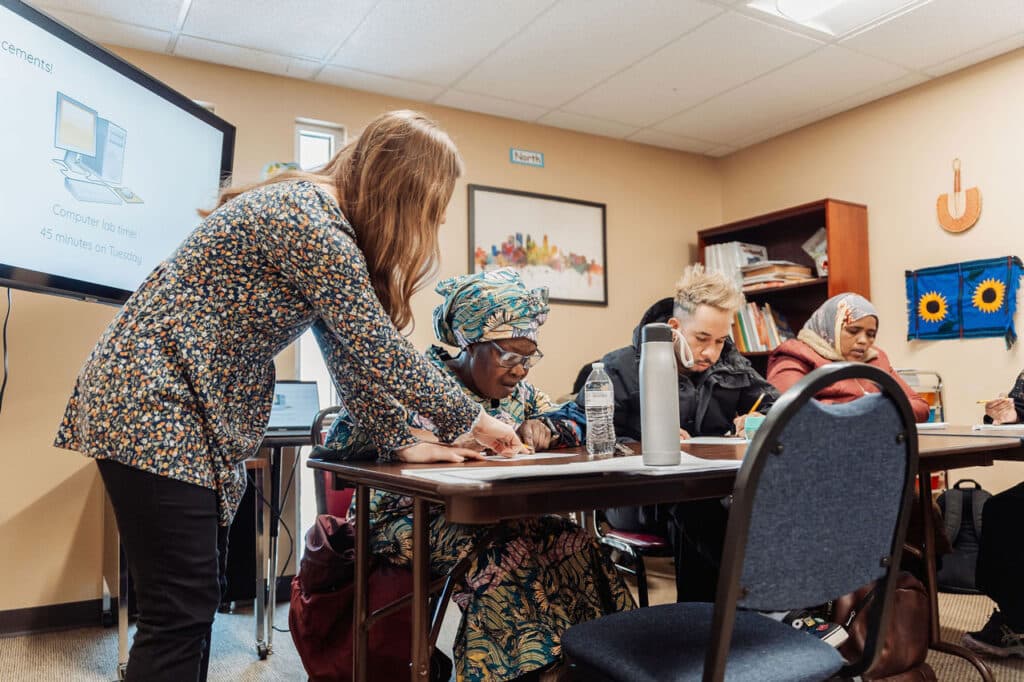
At the Learning in Style School, professional teachers with advanced degrees work in small classroom settings to build these crucial capabilities. The school pairs rigorous instruction with practical support, including on-site childcare that meets state immunization standards.
This allows parents to focus on learning while keeping their young children safe and healthy. Community volunteers further enrich classroom experiences by leading small conversation groups, helping adult students practice real-world interactions in a supportive setting.
Support Health Equity Across Twin Cities Communities
When adult immigrants gain language proficiency, the positive ripple effects extend across whole households and neighborhoods. Parents gain the confidence to handle medical appointments for their children, communicate with school nurses, and manage elder care without constant stress. By taking control of their health care needs, adult learners replace fear and hesitation with self-reliance.
Building Sustainable Health Equity in Minnesota
Creating a healthier, more equitable region requires sustained community commitment. Sustainable health equity relies on neighborhood-based organizations that build trust, celebrate cultural strengths, and offer consistent educational opportunities. Supporting adult ESL programs directly strengthens the social fabric of Minneapolis, Saint Paul, and surrounding suburbs.
You can play an active role in bringing about this meaningful transformation. Dedicated volunteers at the Learning in Style School help adult students practice English conversation, tutor individuals, and build warm connections that welcome new arrivals to Minnesota. Financial contributions allow programs like the Learning in Style School to keep classes free, fund essential learning materials, and maintain crucial family support services.
Consider getting involved with Accola today. Whether you choose to donate to support adult education programs or offer your time as a classroom volunteer, your involvement helps build a healthier, more connected Twin Cities community where every neighbor can thrive.
"*" indicates required fields