
Beyond Words
How Adult ESL Programs Combat Social Isolation in Minnesota Immigrant Communities
Moving to a new country involves much more than packing bags and finding an apartment. It requires rebuilding a life from the ground up. For many immigrants and refugees arriving in Minnesota, the initial excitement often gives way to a profound sense of social isolation. When you cannot speak the local language, everyday tasks become daunting barriers. Booking a doctor appointment or talking to a child teacher feels impossible.
Adult ESL programs break down these walls. By providing adult learners with the linguistic tools they need to communicate, these programs build confidence and foster immediate community connection. They serve as a critical defense against the psychological toll of culture shock.
This work matters more than ever. Recent shifts in the sociopolitical climate have created anxiety for many immigrants in the Twin Cities. Safe educational spaces offer stability, respect, and a path forward.

The Hidden Toll of Language Barriers in the Twin Cities

The Twin Cities region is home to approximately 384,000 foreign-born residents. These individuals make up roughly 12 percent of the local population.
While this diversity brings immense cultural wealth to Minnesota, many of these residents face steep challenges during their resettlement phase. Without strong English skills, newcomers frequently experience acute isolation. This isolation restricts their participation in everyday civic and social activities.
Language barriers also create severe risks to physical and mental well-being. Adults with limited English proficiency report worse health outcomes and face greater obstacles in accessing medical care compared to fluent speakers. The inability to communicate effectively makes it difficult to navigate the health system or find a regular doctor.
In early 2026, Operation Metro Surge had a chilling effect on local immigrant communities. Fear of unconstitutional searches and unlawful detainments led many residents to stay inside.
When people are afraid to leave their homes for school or basic essentials, the entire community suffers. For adult learners, language barriers compound this anxiety. Without the ability to comfortably interact with the broader public, immigrants are often cut off from vital health services, employment opportunities, and cross-cultural relationships.
How the Learning in Style School Creates Connection
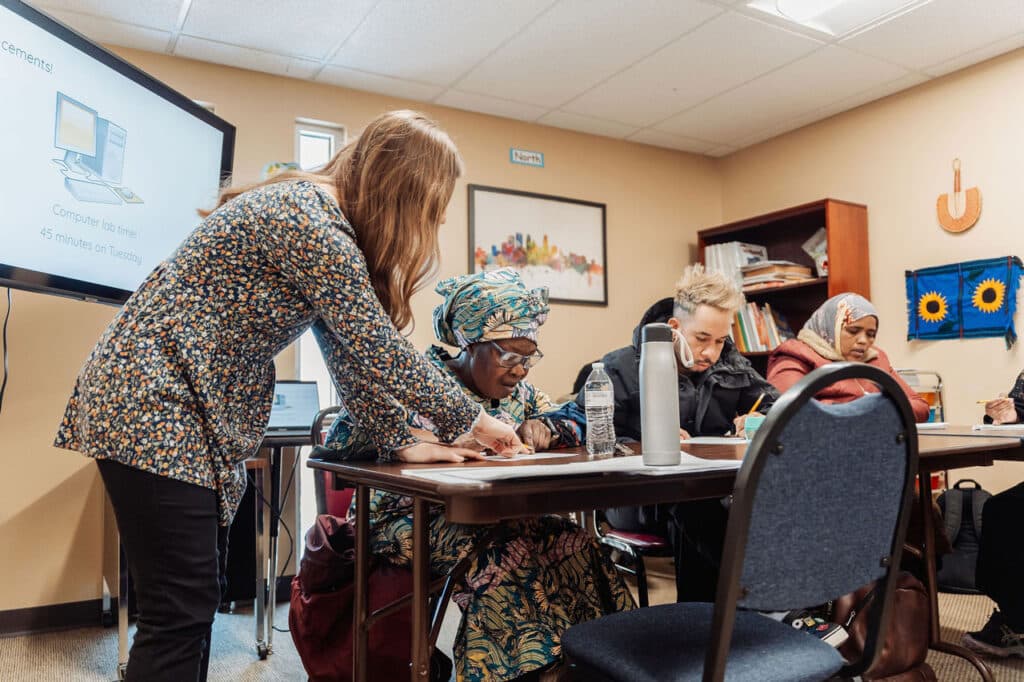
The Learning in Style School in Minneapolis, run by Accola, is a free adult education center that offers classes in English, math, computer literacy, and citizenship preparation. The school meets learners where they are. They utilize professional teachers with advanced degrees and keep class sizes small to prioritize individual attention.
The goal is to help immigrants and refugees develop the capabilities they need to live independently in their new environment.
By focusing on respect and dignity, the school transforms the classroom into a safe haven. Students from over 40 different countries build relationships with each other and the wider community here. When attendance dropped in January 2026 due to community fears, Learning in Style School adapted by offering virtual learning options to keep students connected.
When immigrants attend adult ESL programs, the benefits ripple outward:
- Students acquire the English proficiency required to obtain jobs and access community services.
- Classrooms act as social hubs where adult learners form vital friendships and support networks with peers facing similar challenges.
- Programs frequently integrate community volunteers who tutor individuals and lead small groups.
- These volunteer interactions forge direct connections between immigrants and native-born Minnesotans.
By treating education as a collaborative and respectful process, adult ESL programs replace fear with agency.
Expanding Networks Through Local Connections
A key component of breaking social isolation involves connecting adult learners with the broader Twin Cities ecosystem. The Learning in Style School actively builds partnerships with local institutions to foster neighborly collaboration.
For example, students from the Blake School in Minneapolis have visited the adult education center to work on collaborative projects. These story-based projects focus on family and community themes.
Stand With Minnesota's Immigrant Community
Supporting adult ESL programs is one of the most direct ways to welcome newcomers to Minnesota. When you invest time or resources into these educational initiatives, you help build a state where every resident has the voice and agency to participate in civic life. You help replace isolation with belonging.
The need for safe and supportive learning environments continues to grow. As community demographics shift and external pressures mount, institutions rely on the generosity of local residents to keep their doors open and their classrooms fully staffed. Volunteers play a crucial role in leading small groups and building connections.
Whether you have a few hours a week to tutor or the capacity to make a financial contribution, your involvement matters. Consider volunteering your time or donating to the Learning in Style School today to help immigrant families build strong and independent futures in the Twin Cities.
"*" indicates required fields